
VFD, Stepper Motor & Servo Motor
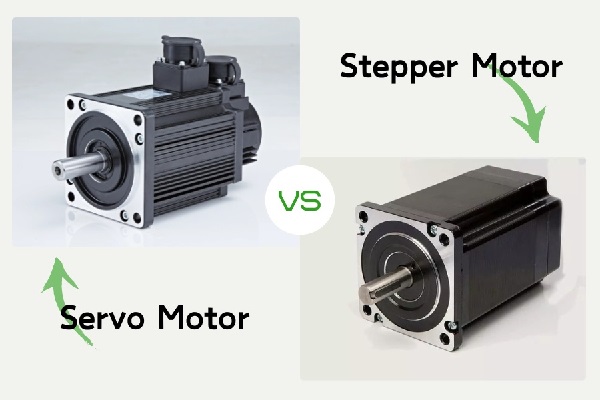
A VFD (Variable Frequency Drive) controls AC motor speed by changing frequency/voltage; a Stepper Motor moves in precise, discrete steps (open-loop) ideal for simple positioning; and a Servo Motor uses closed-loop feedback for high-speed, high-torque, precise control, excelling in dynamic tasks but costing more. Steppers are cheaper and simpler for low speeds (like 3D printers), while servos offer superior dynamic performance (like robotics).
VFD
- Function: A power electronic device that converts incoming AC power to a variable frequency and voltage, allowing precise speed control for standard AC motors.
- How it Works: Rectifies AC to DC, filters it, then inverts it back to a controlled AC output with adjustable frequency and voltage, matching motor speed to frequency.
- Best For: General industrial applications needing smooth speed control and energy savings (e.g., pumps, fans, conveyors).
Stepper Motor
- Function: Rotates in fixed, equal angular steps (e.g., 1.8 degrees/step) when electrical pulses are applied, offering precise positioning.
- Control: Open-loop (no feedback) – assumes it reaches the commanded step, making it simple and cost-effective but prone to missed steps under load.
- Characteristics: High torque at low speeds, good holding torque, low efficiency, can be noisy, prone to resonance.
- Best For: Applications needing simple, repeatable positioning (e.g., 3D printers, plotters, scanners).
Servo Motor
- Function: Provides precise control of angular position, velocity, and acceleration, often with high torque.
- Control: Closed-loop system using an encoder (feedback device) to constantly monitor and correct position, ensuring accuracy.
- Characteristics: High dynamic torque, high efficiency, rapid acceleration, quiet, requires tuning, more complex and expensive.
- Best For: High-performance applications needing speed, power, and accuracy (e.g., robotics, CNC machines, automated machinery).