
Relay
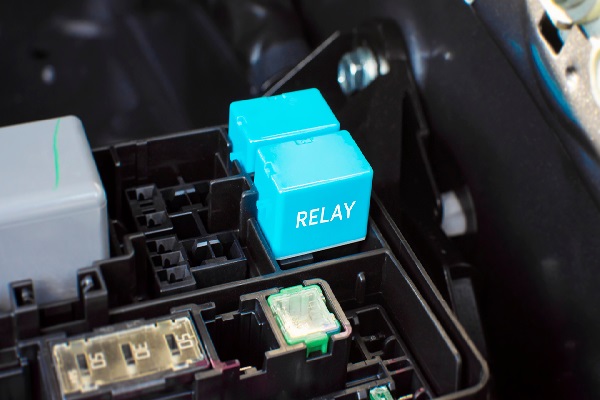
A relay is an electrically operated switch that uses a low-power signal to control a separate, often higher-power, circuit, acting as an electrical "middleman" for isolation and automation, typically using an electromagnet or semiconductors to open/close contacts. It allows one circuit to switch another, offering safety by isolating control (low-power) from load (high-power) circuits, and enabling complex control with simple signals in everything from cars to industrial machines
How it Works (Electromechanical Relay)
- Input Signal: A small current flows through a coil of wire (the control circuit).
- Electromagnetism: The current creates a magnetic field, attracting a movable metal armature.
- Contact Switching: The armature's movement physically opens or closes contacts, switching the separate power circuit (the load circuit).
Key Functions & Types
- Control: Manages high-voltage/current circuits (like motors) with low-voltage signals (like from a microcontroller).
- Isolation: Prevents the control circuit from interfering with the load circuit.
- Automation: Enables automated processes in industrial settings, cars, and home appliances.
- Types: Include Electromechanical Relays (EMR) with moving parts, Solid-State Relays (SSR) using semiconductors for faster switching, and advanced Numerical Relays for complex digital logic.