
Photoelectric Switch
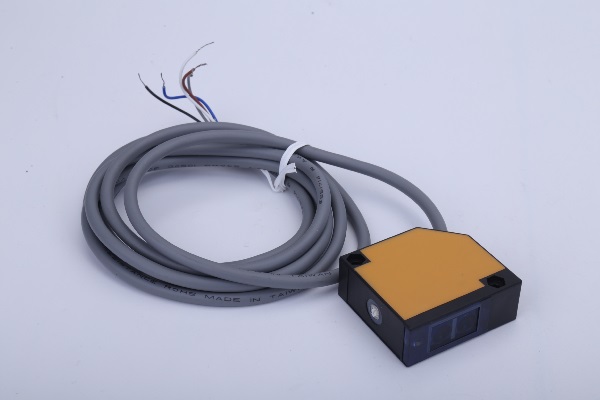
A photoelectric switch, or sensor, detects objects without physical contact by using a light beam (emitter) and a receiver, triggering an electrical signal when the light is interrupted or reflected, crucial for automation in manufacturing, security, and logistics to sense presence, position, or movement via methods like through-beam, retro-reflective, or diffuse sensing.
How it Works (Basic Principle)
- Emit Light: A light source (usually an LED or laser) sends a beam of light (often infrared or visible red).
- Detect Change: A receiver (photodiode/phototransistor) captures the light. An object breaks the beam (through-beam) or reflects it back (retro-reflective/diffuse).
- Convert to Signal: The receiver detects this change in light intensity and converts it into an electrical signal.
- Trigger Output: This signal activates the switch, controlling machinery, stopping conveyors, or sending data to a control system.
Key Types of Sensing Modes
- Through-Beam: Emitter and receiver are separate; best for opaque objects, high reliability.
- Retro-Reflective: Emitter, receiver, and a reflector are in one unit; object reflects light from the reflector back to the sensor.
- Diffuse (Proximity): Sensor detects light reflected directly off the object's surface, with variations like background suppression for precise distance detection.
Common Applications
- Industrial Automation: Counting items, positioning robots, controlling conveyor belts.
- Security: Automatic doors, intrusion detection.
- Packaging: Detecting box presence, sorting items.
Advantages
- Non-Contact: Reduces wear, ideal for delicate items.
- Long Life: No moving parts to wear out.
- Versatile: Detects various materials (metal, plastic, glass).
- Fast & Accurate: High-speed detection for production lines.