
Encoder
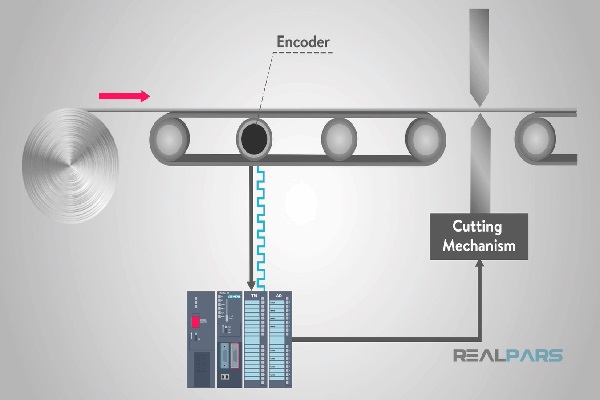
An encoder is a device or circuit that converts information from one format to another, typically taking multiple input signals and producing a smaller number of coded output bits, like turning a decimal number into its binary equivalent or converting mechanical motion into digital signals for a computer. Its main job is to efficiently represent data for processing, storage, or transmission, often by compressing or transforming it into a machine-readable code, acting as the reverse of a decoder.
How it works
- Input/Output: An encoder has
 2n2 to the n-th power
 - Conversion: When one of the input lines is activated
- Logic: It uses combinational logic (often OR gates) to map specific input combinations to unique binary codes.
Types and examples
-
Digital Electronics:
Converts decimal, octal, or hexadecimal inputs into binary (e.g., a 10-to-4 decimal-to-BCD encoder).
-
Motion Control:
Converts mechanical motion (like shaft rotation) into electrical signals, used for position and speed feedback in motors.
-
Data/Signal Processing:
Compresses data or converts analog signals to digital for efficient transmission (e.g., text to ASCII/UTF-8).
Key functions
- Data Compression: Reduces the number of bits needed to represent data.
- Efficient Communication: Enables different parts of a digital system to communicate effectively.
- Data Conversion: Transforms data into a format suitable for processing or storage.