
Servo Motor & Drive
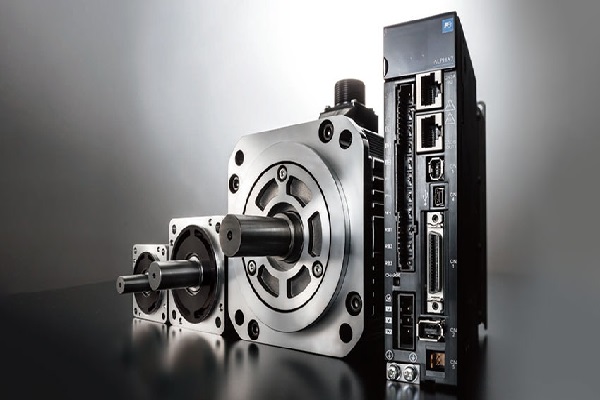
A servo motor system precisely controls motion (position, speed, torque) using a closed-loop feedback system, where the servo drive acts as the "brain," receiving commands, interpreting feedback from sensors (like encoders), and delivering the exact power (voltage/current) to the servo motor for dynamic, accurate movement, essential for robotics, CNC, and automation.
Servo Motor Description
- Function: An electric motor providing precise control over angular/linear position, velocity, and acceleration.
- Components: Typically includes the motor itself, a sensor (encoder) for position feedback, and a controller.
- Operation: Uses electromagnetism, with its rotor driven by an internal energy field, allowing for highly dynamic and compact designs.
Servo Drive Description
- Function: The amplifier and "nervous system" of the servo system, translating controller commands into motor power.
- Operation: Takes signals from a controller, compares them to feedback from the motor's sensor, and adjusts voltage/current to the motor to correct errors.
- Key Role: Manages torque, speed, and position, ensuring smooth, controlled motion.
How They Work Together (Closed-Loop System)
- Command: A controller sends a desired position/speed/torque signal to the servo drive.
- Power Conversion: The drive converts this signal into precise electrical power for the motor.
- Movement: The motor moves to the target.
- Feedback: The encoder sends the motor's actual position back to the drive.
- Correction: The drive compares desired vs. actual position and adjusts power to minimize the error, making the system highly accurate.