
PLC (Programmable Logic Controller)
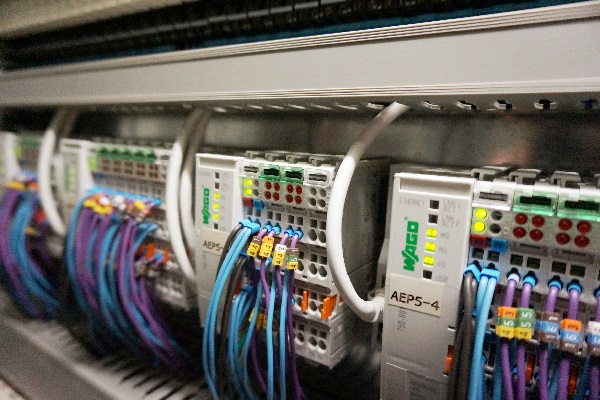
A PLC (Programmable Logic Controller) is a rugged, specialized industrial computer that automates processes by monitoring inputs from sensors, executing pre-programmed logic, and controlling outputs to machinery like motors, lights, and valves, serving as the "brain" for tasks in manufacturing, energy, and building systems, replacing older, complex relay systems for greater flexibility and reliability. PLCs are designed for harsh environments, using software logic instead of physical wiring for control, and can range from small, pocket-sized units to large, modular systems.
Key Functions & Characteristics:
- Input Monitoring: Gathers data from sensors (e.g., temperature, pressure, proximity).
- Logic Execution: Processes this data using programmed instructions (often in ladder logic) to make decisions.
- Output Control: Sends signals to actuators (motors, pumps, solenoids) to perform actions.
- Rugged Design: Built to withstand extreme temperatures, vibration, and electrical noise in industrial settings.
- Programmable: Logic is software-based, allowing for easy changes without rewiring.
- Reliable: Offers high reliability for continuous operation (24/7).