
Push Button
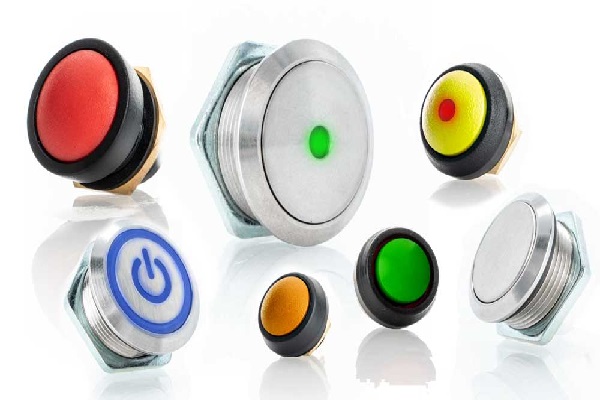
A push-button is a simple mechanical switch that controls an electrical circuit by closing or opening it when pressed, often returning to its original state with a spring, found everywhere from doorbells and keyboards to elevators and complex machinery to activate functions or input commands. They offer easy, reliable input, working moment-by-moment (momentary) or staying on/off until pressed again (latching), controlling everything from lights to software actions.
How it works
- Mechanism: A button, usually plastic or metal, is connected to internal contacts.
- Action: Pressing the button moves a spring, making or breaking the electrical connection.
- Release: The spring pushes the button back, interrupting the circuit (for momentary types).
Types
- Momentary: Activated only while pressed (e.g., keyboard keys, calculator buttons).
- Latching: Stays in the pressed state until pushed again (e.g., power buttons, emergency stops).
Common uses
- Electronics: Keyboards, remote controls, game consoles.
- Appliances: Doorbells, washing machines.
- Industrial: Control panels, machine operation.
- Software: Form submission, menu navigation.